Ruta Butkute
Public relations (PR) has a
bad rep across all publics. Many deem it unethical, a “spinning” mechanism.
Even the humanitarian world’s use of PR does not help its reputation.
Celebrity endorsement
One instance
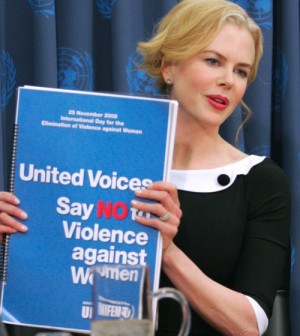
where charitable organizations need PR is when they put a celebrity in the
spotlight of their campaign. The use of celebrity activists by charitable
organizations is not a new phenomenon. It goes back several decades, before the
onset of social media and the internet.
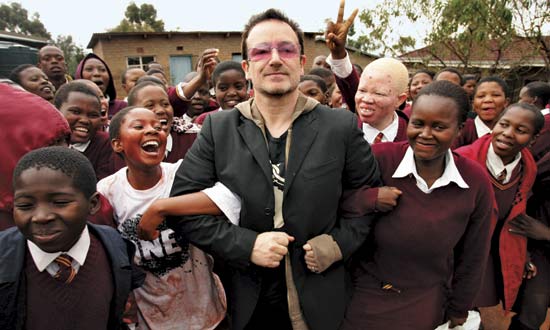
Celebrities
get slammed for their white savior complex when there is no organization behind
them as well, like Bono’s actions in Africa.
 |
| U2 singer Bono in Africa Source: capitalresearch.org |
 |
| Nicole Kidman - Goodwill Ambassador Source: sheknows.com |
More ethical PR
While ethical
PR practice is a highly debatable matter, Hopkin’s article has exposed some
ethical considerations for better PR practice when dealing with humanitarian
issues. I will outline some key insights for PR practitioners to use in the
humanitarian sector. While the advice is not so new, it is crucial to consider
it for cautious communication in this sector.
PR
practitioners should listen to all the stakeholders
Public
relations should not serve one party and fool all the others, especially not in
the humanitarian sector. In the UN case, the author makes a claim that becoming
a celebrity representative for a UN humanitarian cause is a market opportunity
to gain more fame. However, PR packages this move as a humanitarian act and
often fails to reveal the stories of the people being represented by the
celebrity.
If PR
practitioners in the humanitarian sector want to serve vulnerable communities,
these people shouldn’t be left out of the discourse, as they are stakeholders
as well. Practicing symmetrical communication in the humanitarian sector is
even more vital than in other sectors, because the stakeholders (beneficiaries)
are some of the most marginalized and vulnerable people in the world.
Let’s not
forget the power of PR
The way PR
packages a message has wide consequences for society. In the humanitarian
sector, we are often dealing with the welfare and often times the mere survival
of human lives. Thus getting ‘the package’ wrong can have devastating
consequences. While I’m not suggesting that the use of celebrities in
charitable causes doesn’t garner immense funds, which can be used to make a
good impact, the use of PR to make already powerful people appear more powerful
in the humanitarian sector should not be the aim. Instead, PR practitioners
could try to empower the beneficiaries. How? By giving them a voice.
Obviously,
the moral responsibility of PR in the humanitarian sector is somewhat greater
than in the corporate world. If you can’t do the moral walk, don’t do the PR
talk.
-----------------------
About the
author: Ruta
Butkute is a Corporate Communications Master’s student at the University of
Amsterdam. Coming from a Liberal Arts and Science background, she has an
interest in race studies and communications and wishes to pursue a career in
the non-profit world.

No comments:
Post a Comment