 |
| Source: NOS.nl |
On January 13th 2012, the Costa Concordia runs aground at Isola de Giglio, Italy around 10:00 PM CET. Water enters the vessel through a gash in the ship’s port side, and the ship overturns. A six-hour rescue mission brought most passengers ashore, but the effort could not prevent 32 deaths and damages of at least US$500 million.
However, it’s not the disaster that ruined Carnival Corporation’s brand, it was the company’s crisis response that sent its reputation to the ocean floor.
Carnival Corporation, parent company of the operator of the vessel, issued its first press release on January 14th, 3:45PM EST.
Starting with a description of the event and stating that orders were given to abandon ship and deploy the lifeboats, the press release continues by responding to news reports on deaths and injuries, offering sympathy and condolences. They expressed gratitude to the Italian Coast Guard and local authorities and communities for their assistance and support, and emphasized that the company was committed to fully investigate the cause of the events, stressing that the safety of guests and crew remain the number one priority. In closing, the press release offers country-specific contact numbers so friends and family members can reach Costa Cruises. Not bad for a press release, right?
Nope. Even though Carnival Corporation did – thank god – acknowledge what happened and expressed a commitment to make things right, pretty much crisis communication 101 in any situation, there were a lot of things that the company did wrong. Here’s three lessons that we can learn from them:
- Know your crisis. Let’s face it. We all know about that one unsinkable ship that sank, and though our hearts have gone on, it’s left a pretty big stain on the industry’s reputation. And it’s not just the history of similar crises that influences the effectiveness of your crisis response, so does management’s understanding of the crisis so that it can tailor its response to the type of crisis. Managers need to ask themselves: is the organization a victim of the crisis, was it an accident, or was the crisis preventable? Carnival’s management decided to go with pointing fingers, blaming the captain for everything and presenting the organization as a victim of his actions. Distancing themselves from ownership, they even tried to fix it by offering passengers discounts on their next cruise. Yet, the crisis was a preventable one: the captain shouldn’t have deviated from its planned route, he definitely shouldn’t have turned off the alarm system for the ship’s navigation, and last but not least, he definitely shouldn’t have abandoned ship – which turned out to be a lesson for the company’s CEO.
- Near, far, wherever you are – just be there. Okay, captain Schettino abandoning ship was not a great crisis response from him, personally. But it turns out that Captain Schettino wasn’t the only one who disappeared – so did Carnival’s CEO. Despite the fact that research has shown that stakeholders don’t care about whether the company’s crisis response is defensive or apologetic – what matters is that the CEO is visible (or audible). Yet, not only did Carnival’s CEO Micky Arison wait a week before he sent one of the company’s big executives to the crash site, he himself only visited well over a week after the disaster. Too little, too late, Micky. Which brings me to the next point: time.
- Timing is key. It’s hard enough to have the media report on your crisis in a desired way, but it’s even harder if you wait until the story – your story! – is already told by someone else. Carnival Corporation’s press release not only came well after footage of the chaos on board spread – we live in the era of technology after all – it also did not make clear who was to be held responsible for the crash. This leaves space for the media to introduce their own stories about who is to be held responsible, and the company’s infighting only fed into the media’s already negative conflict frames, highlighting the company’s mishandling of the crisis for the whole world to see. Though there is never a guarantee that the media will adopt your story (on the contrary, it’s more likely that the media will reframe your organization’s response in whatever way they see fit), it doesn’t hurt to at least try to positively affect media coverage by proactively constructing the narrative. Just don’t go down without a fight. You’re not Schettino.
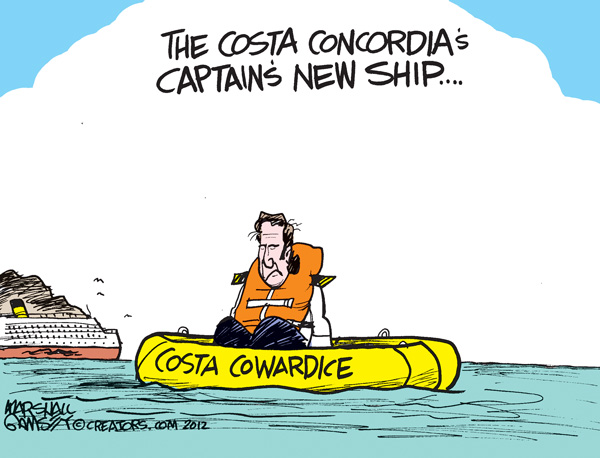 |
| Credits: Marshall Ramsey |
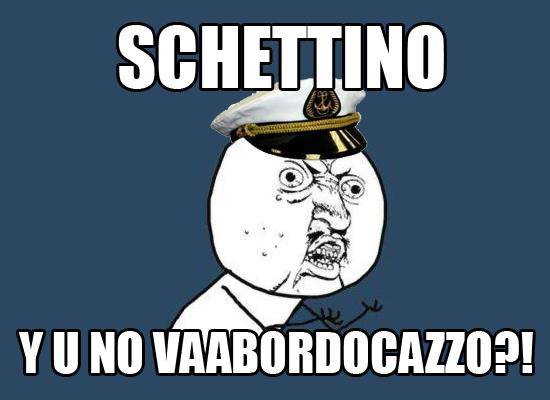 |
| The recorded call between the Italian Coast Guard and captain Schettino in which the captain was ordered to "get the F back on board" went viral as soon as it was leaked -- and turned Schettino into an internet meme soon after. (source: iitaly.org) |
--
Kimberley Ho is a Communication Science student at the University of Amsterdam, specializing in Political Communication. She also holds an MA in International Relations from Leiden University, and studied at the University of Sydney and William & Mary, VA, USA. Used to make coffee for a living, because #liberalartsgraduate.

No comments:
Post a Comment